Assessment
Assessment and reporting plays a crucial role in the teaching and learning process. Assessment provides feedback on learning for both students and teachers, identifies future learning needs and enables a teacher to modify their teaching practices where necessary.
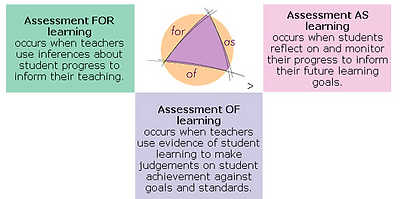
I use the assessment practices ‘as’, ‘of’ and ‘for’ learning as instruments to aid in modifying the curriculum to achieve learning outcomes, while providing students with the opportunity to reflect on their learning, inform them of their progress and identify areas for improvement.
“"Melissa has incorporated a range of formative and summative assessment types into her lesson plans and/or units of work, and was able to give specific individual feedback to students outlining both their strengths and areas for improvement"
Classroom Examples
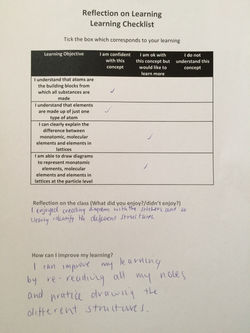 Students reflect on their understanding of elements and how they could improve their future learning. |  Year 9 Dance formative assessment of skill and participation. |
|---|---|
 Drawing out prior knowledge of atoms, elements, compounds and mixtures through brainstorm. |  Separation Techniques procedure (Flow Chart) |
 Using TWHL charts in Science |  Summative assessment of Year 8 Basketball PSI modules. |
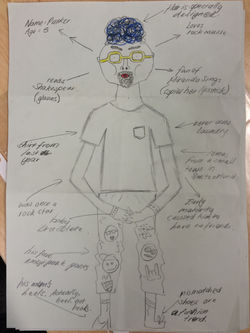 Identifying students understanding of diversity in health education. |
Reporting
Reporting not only assists in the improvement of student learning but also highlights areas that need additional assistance. It provides evaluation of a program and informs future curriculum to ensure desired learninig outcomes are achieved. Furthermore reporting enables collaborative relationships to be developed among students, teacher and parents.
 |
|---|
 |